
Romans, malefactors and our pupils
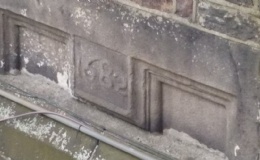
Our school was endowed in 1472 by John Gardyner, philanthropist and Mayor of Lancaster. We had probably already existed for two hundred years. John Gardyner wanted the school to last forever – and made it happen!
From the Middle Ages until 1851, the free schole was in the Priory churchyard, just outside the Castle's walls. Next time you have a few minutes' wait for a train at Lancaster station, you should walk up to the little cobbled street of Hillside to find the plaque that marks the site.
Archaeologists (including some of our pupils) excavated the original schoolhouse site a few years ago.
They commented on its rich and varied history: “The area is of interest for three reasons: (1) it lies within the Roman forts; (2) it was partly on the site of a Free School, which later became Lancaster Royal Grammar School, and (3) it was partly the site of a ‘malefactors’ (i.e. criminals etc.) burial place c. 1700-1818, in unconsecrated ground.”
They found Roman remains, but fortunately not the malefactors’ graves. They traced the schoolhouse walls and flagstones. They found fragments of inkwells and writing slates, and marbles – perhaps lost by schoolboys in the hurried end to a rowdy game between lessons one far-off day.
The school building was rebuilt in 1682, with a date stone that was later moved to the wall of the current Sixth Form centre in Old School House.
The history of Lancaster Royal Grammar School contains the history of our city. But schools create the future, one generation at a time. Brilliantly, our classrooms today are a picture of the city’s future too!